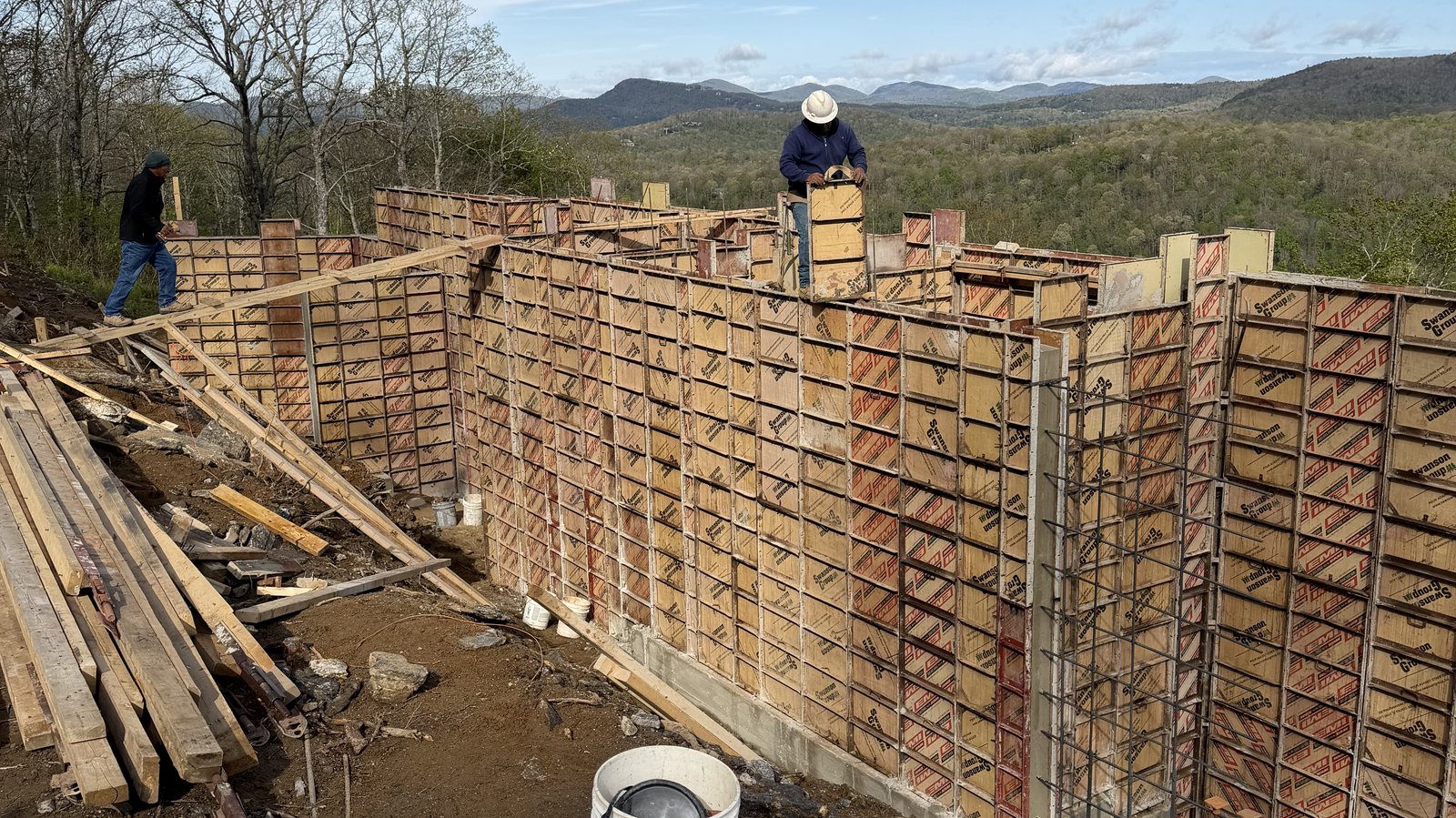
Powell Construction is based in Sapphire Valley. It is where our office sits, where we have built many of our projects, and where we have watched the terrain, the trades, and the buyer market evolve over the last four decades. When a buyer calls about a Sapphire lot, we are not describing a community from a distance. We are describing ground we know.
That local depth changes what a builder can tell you before you buy. This article is what we tell a buyer thinking seriously about Sapphire Valley: what makes the community distinct, what building here actually involves, and what to look at before you close on a lot. If you are still weighing whether the Plateau is worth the build cost at all, read why a mountain build costs more first.
What Makes Sapphire Valley Distinct
Sapphire Valley sits on the southeastern side of the Highlands-Cashiers Plateau, roughly seven miles east of the Cashiers crossroads. Elevations across the community range from around 3,000 feet in the valley floor to over 4,500 feet in higher subdivisions like The Divide at Bald Rock. The area was known as "America's Switzerland" in the early 1900s, when Charleston and Atlanta families first built summer cottages here to escape coastal heat. Corundum sapphire mining gave the community its name.
Modern Sapphire Valley was developed starting in 1954, when the Howerdd family purchased Lake Fairfield, the original Fairfield Inn, and 6,000 acres around them to create the resort. Today the resort infrastructure still anchors the area: the Sapphire Valley Resort amenities, Ski Sapphire Valley, the 50-acre Lake Fairfield, and the Country Club of Sapphire Valley. Where Cashiers has a walkable village center and Highlands feels like a cultivated small town, Sapphire feels like a mountain community organized around outdoor life.
The property inventory in Sapphire spans a wide range. Smaller resort-area lots and homesites in communities like Holly Forest and Country Club Estates. Larger estate lots in gated subdivisions like Bald Rock, FiveStone, and Sapphire High. Lakefront lots on Fairfield and Hogback. Undeveloped acreage on the outer edges. The buyer profile is often a family bringing extended generations for the summer, or a couple building a mountain second home to escape Florida or Atlanta heat.
The Land in Sapphire Valley
We have walked many Sapphire lots, and a few patterns show up consistently:
- Slope varies dramatically within short distances. A ridge lot two hundred feet from a valley lot can have completely different building implications. Do not assume the neighbor's build cost translates to yours.
- Granite is close to the surface on most higher elevation lots. Excavation costs are almost always higher than a buyer expects. See our site preparation article for the details.
- Tree cover is dense but variable. Some lots have significant clearing costs; others come mostly clear. Read the lot for both the home site and the views you want to preserve.
- Water access on lakefront or near-lake lots triggers additional permit considerations. If you are looking at Fairfield or a lot with lake views, verify the setback rules and any HOA architectural review requirements before you commit.
- Older lots may have easement or access issues that were never fully documented. This is where a builder walk-through matters. We have caught access problems buyers would have missed at closing.
What Building in Sapphire Looks Like, Practically
Sapphire straddles the Jackson-Transylvania County line. Most of Sapphire Valley Resort and the communities around it sit in Jackson County; some southern and eastern lots sit in Transylvania. Which side of the line your lot falls on determines which county issues your building permit: Jackson County Permitting and Code Enforcement or Transylvania County Building Permitting. Both run professional review processes with staff who understand mountain construction. Plan for a 4-to-6 week building permit review for a typical custom home, with septic engineering often adding another 8 to 16 weeks on top for engineered systems.
Sapphire has some community water and sewer coverage in the resort core, but most of what we build is on private septic and well. The septic situation is Plateau-standard: engineered alternatives are common, soil conditions vary by lot, and getting the septic evaluation done early is the single most important step a Sapphire buyer can take before closing on a lot. The NC On-Site Water Protection Branch is the regulatory body.
HOAs and POAs (property owners associations) apply in some Sapphire pockets and not others. Where they do, they add a design review layer to the project. Typically manageable, but real time on the calendar. If you are looking at a lot in a governed community, ask the seller for the current architectural guidelines before you close.
Trades on the Plateau tend to be relationships, not transactions. In Sapphire we have working relationships with excavators, framers, mechanical contractors, and finish trades that go back decades. That is not marketing language, it is the operational reality of running a build here. The Plateau has a limited pool of quality subs, and knowing who can actually show up when scheduled is worth more than the marginal savings of hunting for the cheapest bid.
Where Sapphire Costs Land
Sapphire projects tend to land in the mid-range of our published $450 to $850 per square foot range. Simpler builds on manageable lots, a straightforward 3,500 sq ft home on a moderate slope with standard-plus finishes, often run in the $500 to $600 per square foot range. Larger and more complex builds, or highly finished homes with dramatic architectural elements, run higher, sometimes into the $700s or $800s.
What moves a Sapphire project up or down within that range is what we outlined in that article: site complexity first, architectural complexity second, finish level third, home size fourth. The one factor we would call out specifically for Sapphire is that so many lots have granite close to the surface, so buyers who under-budget site work are the ones who get hurt. If a builder gives you a Sapphire site work number without walking the lot, get another opinion.
What to Look at Before You Buy a Sapphire Lot
If you are considering a Sapphire lot, five questions will save you the most trouble:
- What is the actual slope of the buildable area? Not the lot as a whole, the piece of ground where the home will sit. Slope drives site cost.
- How close is granite to the surface? A soil evaluation is inexpensive and worth doing before closing.
- What is the septic path? Get a soil test from a licensed septic evaluator on the lot. Engineered alternatives take 3 to 6 months to permit. Know what you are dealing with early.
- What are the ARB or HOA requirements? If a community governs the lot, get the current architectural guidelines and review them before you commit.
- Where does the driveway want to go? Long uphill driveways add real cost. A short flat driveway is a gift. Look at the driveway path with the same seriousness as the home site.
We walk Sapphire lots for buyers before purchase, at no cost. A two-hour walk with us can catch a problem a survey would not show, and can give you a realistic site work number to plug into your budget before you close.
The Bottom Line
Sapphire Valley is our home. It is where we have built many of our homes, know the subs, and have walked more lots than we can count. If you are considering building here, that local depth is real value, not marketing. And the earliest we can get involved, the more it is worth.
If you have a Sapphire lot under consideration, or are shopping between a few Sapphire options, we will walk them with you before you buy. Bring us the addresses.
Russ Henkel · (828) 226-7226 · Will Powell · (828) 506-7519
Powell Construction, Inc. · Serving Sapphire Valley, Cashiers, Highlands, Lake Toxaway, and Glenville.